
Landskapet Uppland
A historically significant Swedish province of castles, ancient remains and runestones. Uppsala, the regional capital, was once a center of power for the Sveariket* kingdom during the Late Iron Age and the Viking Age (until the 11th century) and then a church and cultural center during the Middle Ages.
-
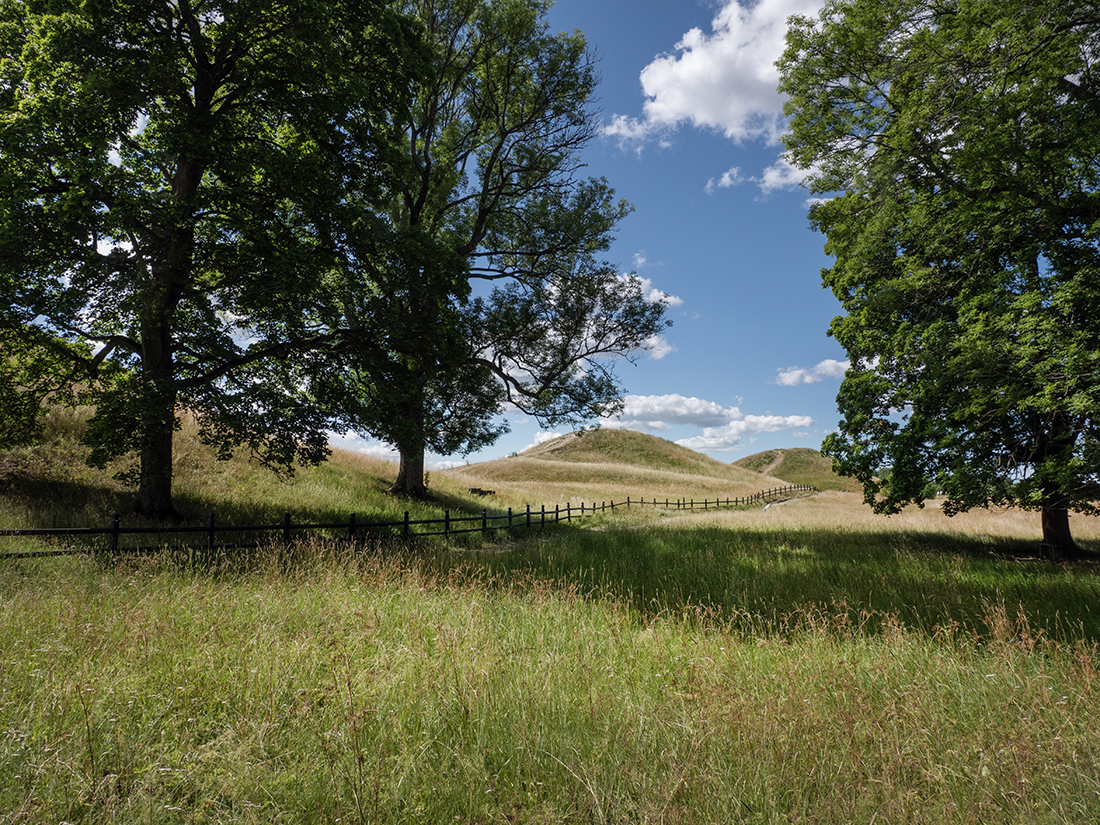 The Uppsala Mounds, known as the Royal Mounds or Kungshögarna, are three monumental 5th- and 6th-century burial barrows located in Gamla Uppsala. Folklore long claimed these large mounds held the resting places of the Norse gods Thor, Odin, and Freyr.
-
-
Uppland - the province of castles, ancient remains and runestones
The province of Uppland borders Södermanland, Västmanland and Gästrikland. It is bordered by Lake Mälaren and the Baltic Sea. It literally means “up or upper land” and is sometimes referred to as Uplandia in old English literature. The name refers to the fact that Uppland is located “above”—or up—the coastline of the southern provinces and includes Lake Mälaren. With the support of archaeological and geological research, it is assumed Uppland’s first settlers came from the west of Närke and Västmanland at least 8,000 years ago. Their settlements were at the coastline, but due to geological uplift changes, these areas are now located in the country’s interior. With the establishment of agriculture and stock farming around 4,000 BC, there was an increase in the number of findings of treasures. A settlement found in 1902 at Åloppe, northwest of Uppsala, belongs to the Neolithic Age (10,000 BC to 2,000 BC). A variety of archaeological finds from the Stone Age have been discovered, especially in the middle parts of western Uppland; it is therefore considered the province’s oldest and most densely populated area in the Stone Age.
Uppland and perhaps the entire Nordic region’s most important find from the Viking Age is the Viking settlement Birka, believed to be Sweden’s first “city” on the islands of Adelsö and Björkö in Lake Mälaren. -
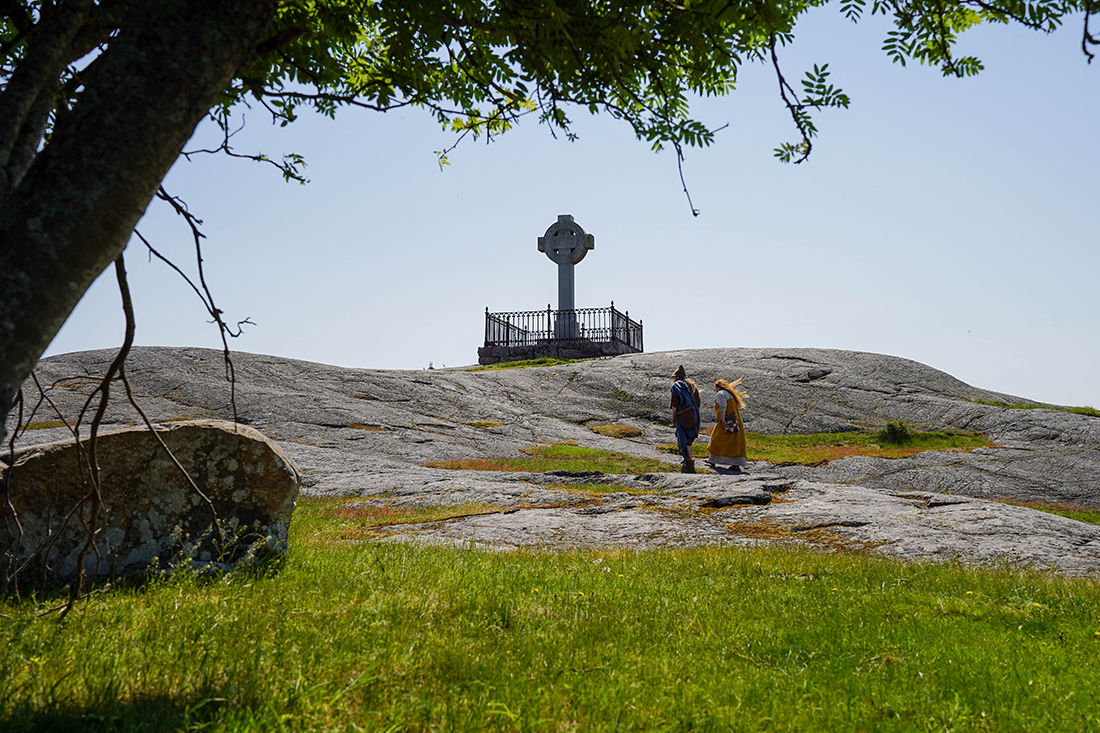 Ansgar’s Cross (Ansgarskorset) standing atop the hill at the ancient Viking trading center of Birka on the island of Björkö in Lake Mälaren, Sweden. Erection of the stone monument dates back to 1834 to commemorate the Christian missionary Ansgar’s 9th-century visit. The archaeological site Birka was Scandinavia’s largest trading point from 750 to 950 AD. Birka is also the site of the first known Christian congregation in Sweden, founded in 829 by Saint Ansgar. Photo: Emmie Bolmstedt/imagebank.sweden
-
-
Most populated
Uppland has approximately 1,602,652 inhabitants, which means it is the province (“landskap”) with the highest population in Sweden. It is known for its many castles, manor houses and runestones. Its landscape consists mostly of slightly hilly plains; its provincial flower is the regal lily (Kungsliljan) and provincial animal the white-tailed eagle. Uppland’s biggest city is Stockholm, but in reality only parts of Stockholm are located in Uppland (the rest of Stockholm is located in Södermanland). The next biggest town is of course Uppsala, though its population of 177,000 makes it the country’s fourth largest city after Stockholm, Göteborg and Malmö. A mere 45 miles north of Stockholm, Uppsala has been the ecclesiastical center of Sweden since the 12th century and is also home to Scandinavia’s largest cathedral and the Nordic region’s oldest university, founded in 1477. The late UN Secretary General Dag Hammarskjöld, son of Prime Minister Hjalmar Hammarskjöld (in office 1914-1917) spent much of his childhood here, the botanist Carl Linnaeus (1707-1778) received his higher education here and the astronomer Anders Celsius (1701-1744) was born and educated in Uppsala. Celsius founded the Uppsala Astronomical Observatory in 1741, and a year later proposed the Celsius temperature scale, which is named after him. If you followed the Bergman Year in 2018 you may have learned that the famous director (1918-2007) also hailed from Uppsala.
Gamla Uppsala (Old Uppsala), about three miles north of the present city center, is the location of the pre-Christian settlement and the pagan center of old Sweden, which later provided the new name for the medieval city that grew in the south. Gamla Uppsala is mostly known for the burial mounds (Kungshögarna) of pre-Christian monarchs and the initial cathedral, likely built over the old heathen temple in 1164. -
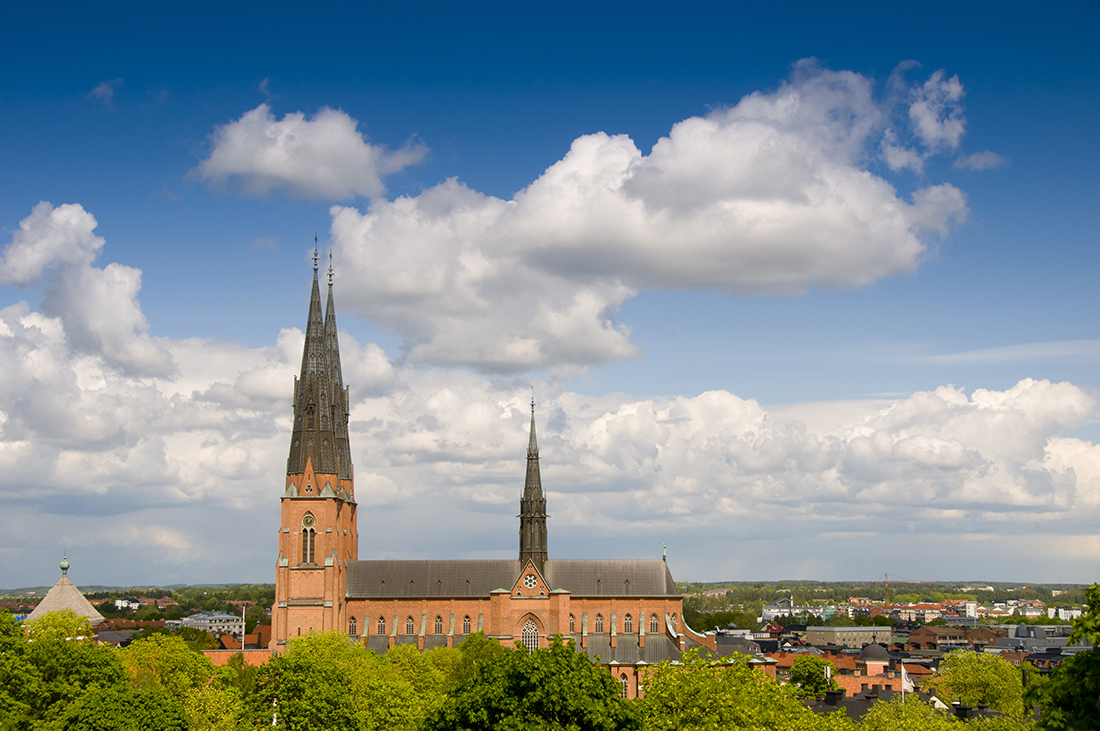 Uppsala Cathedral is one of the largest cathedrals of Northern Europe and was dedicated in 1453. The relics of St:Eric are kept in Uppsala Cathedral, and Gustav Vasa, Carl von Linné, Olaus Rudbeck, Emanuel Swedenborg and several archbishops are buried here. Photo: Mark Harris/imagebank.sweden
-
Uppsala Cathedral is one of the largest cathedrals of Northern Europe and was dedicated in 1453. The relics of St:Eric are kept in Uppsala Cathedral, and Gustav Vasa, Carl von Linné, Olaus Rudbeck, Emanuel Swedenborg and several archbishops are buried here.
-
-