
Raising Swedish Flower Hens in the U.S.
This barnyard breed came close to extinction in the 1970s, and recovery was based on just three flocks found in the rural villages of Esarp, Tofta and Vomb, all in Skåne.
-
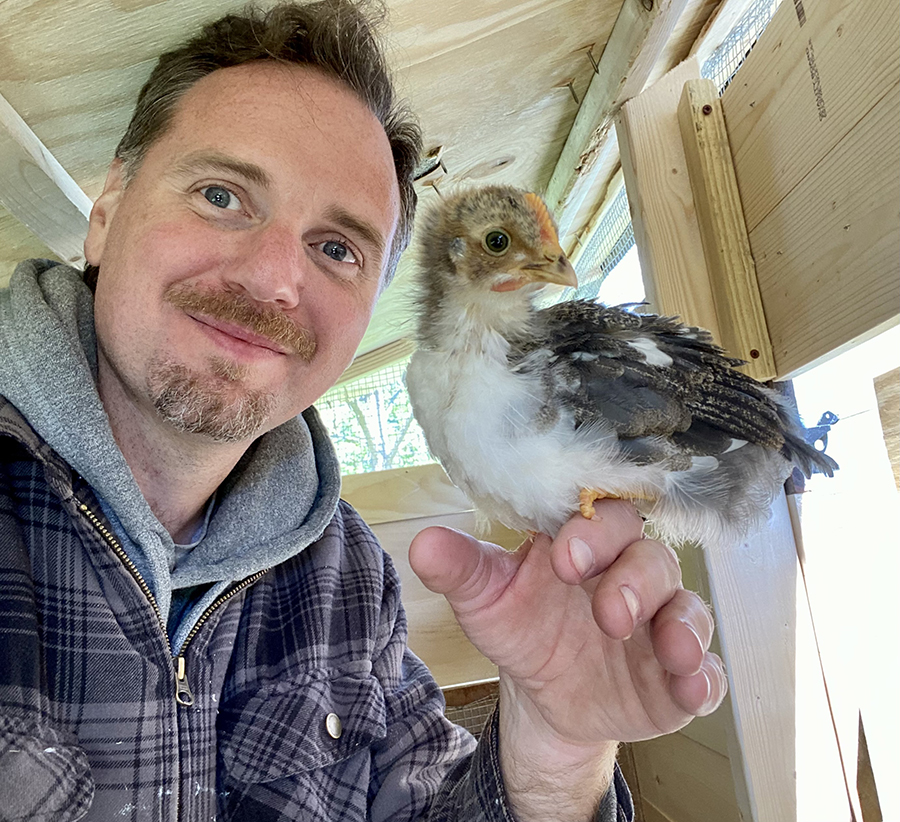 Youngstown, Ohio based Tom Hetrick with a Swedish Flower Hen chick.
 -
-
Tom Hetrick of Youngstown, Ohio is raising Skånsk Blommehöna! Swedish Flower Hens do exist and they are uniquely Swedish in origin. They are a domestic landrace breed of chicken, meaning they are locally adapted and developed naturally in a specific region and thrive in both backyard and free-range environments - in this case, from Skåne in southern Sweden.
The Skånsk Blommehöna breed began to fade out in the late 1800s with the introduction of imported chickens bred specifically for high egg production or greater meat yield. By the mid-1900s, the Swedish Flower Hen was a rarity in the country of its creation.
The barnyard breed came close to extinction in the 1970s, and recovery was based on just three flocks found in the rural villages of Esarp, Tofta and Vomb, all in Skåne. The Svenska Lanthönsklubben (breeders association) helped with their recovery, exporting 15 birds to Florida in 2010. In 2014 a total population of 1,592 was reported. In 2019 the total was down to 1,123 in 85 flocks. By 2022 the conservation status of the breed was listed as "at risk/endangered."
Known for their unique “flowered” plumage, no two Swedish hens look alike, and their colors can range from red and black to blue, white, and everything in between. With speckled plumage (white tips on feathers), the white-tipped feathers make the birds look like a field of blooming flowers. Their base color can be black, blue-gray, reddish-brown, off-white, red or yellow. Almost all the color variety has white on the tips of the feathers, giving the bird the spotted appearance. -
In the footsteps of his Swedish heritage
Tom came across the rare Swedish hens when he decided last year to follow in the footsteps of his Swedish heritage and raise chickens. At the height of the bird flu epidemic, he discovered many hatcheries were sold out of baby chicks for weeks, even months. He looked into specialty breeds and discovered the Skånsk Blommehöna. A farm in Grove City, Pennsylavania raised them, and he purchased a dozen fertilized eggs that he carefully placed in an incubator ... and like clockwork, 11 chicks hatched after 21 days!
They were carefully vaccinated and grew too big for his basement, so he built a coop in the backyard with a run attached for them to get fresh air and exercise.
Tom explained, “I couldn’t be happier with my Swedish Flower Hens! I’ve found them to be very calm, docile, friendly, curious, independent and hardy. They started laying eggs between 4-5 months and laid prolifically through the beginning of winter. In the fall, several of the hens already went broody, meaning they started consistently sitting on their eggs to hatch out young.
“The chicks were a variety of different colors-various shades of browns, white, black strips, gray stripes, etc. It was very fun watching their colors develop as they got older and I have definitely found it true that no two Swedish Flower Hens look alike.”
Nils R. Caspersson -
-