
Fori’s right to roam
A Swedish immigrant in upstate New York practiced the ancient land-use <I>allemansrätten</I> - the Swedish right to public access. A practice that may well date back to Viking times and probably earlier.
-
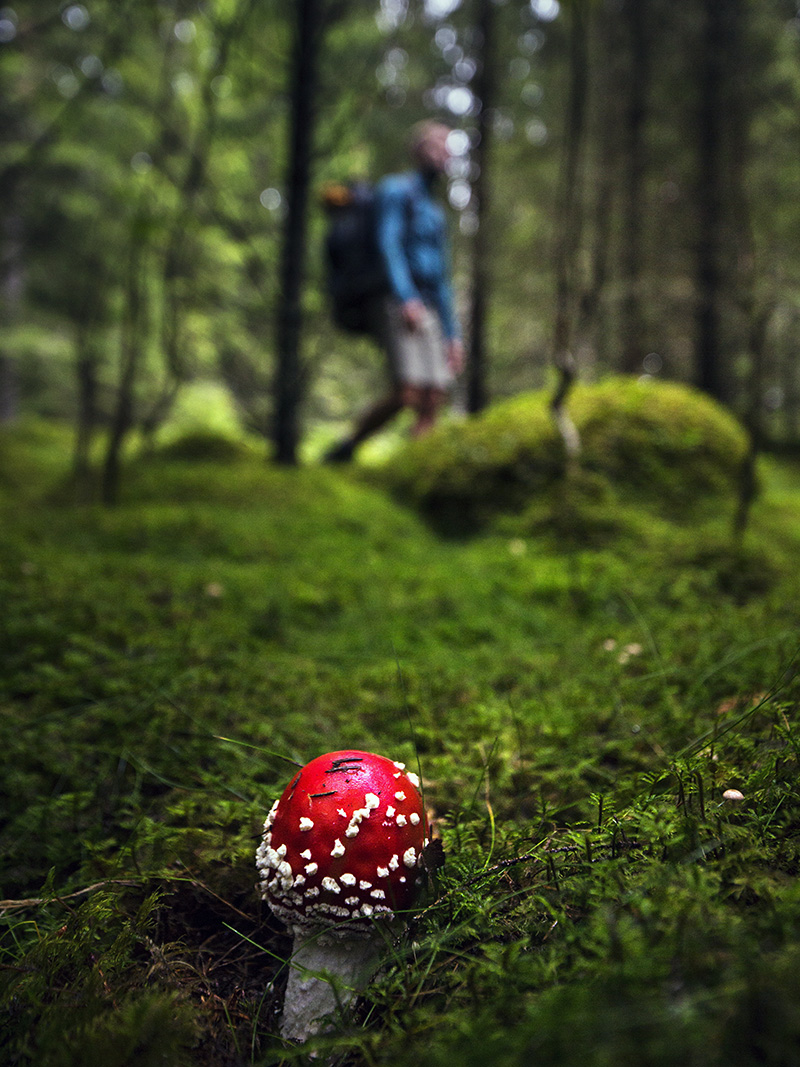 Photo: Roger Borgelid. Photo for illustration purposes only.
 -
-
I have written many stories about my grandfather Arden Beckman in a new book about my family, ancestors and the area of upstate New York where I grew up. Stories about how he lost his hand, how he made his living, how he loved gardening and the natural world.
This one introduces you to one of Grandpa's friends, an old Swedish man named Fori. He lived in Westfield many years ago and was a bit older than Grandpa. I remember Fori from my younger years but I never knew his last name. When I asked my uncle about it and described Fori in detail, he replied: "That sounds like it could be any one of a number of Grandpa's friends."
Fori knew who I was but we never talked at length and only exchanged greetings when we passed each other walking in the street. He still had a bit of the charming lilting Swedish accent that was so common around the Chautauqua Gorge 100 years ago. This accent is seldom heard nowadays because there are fewer "fresh" Swedish immigrants around and because those who emigrated more recently had already learned English (and probably several other languages) as school children in Sweden, so this accent scarcely exists any longer in America. Swedish Americans sometimes do imitations of it but you would need to be a monolingual Swede who started learning English later in adult life to have this authentic sort of accent today.
I never knew where Fori lived in town. He had no immediate family, no car and no driver's license. I would guess he lived in a rooming house situation, or if he was too poor for that, perhaps in some back bedroom offered to him by a younger and more prosperous distant relative. Perhaps Fori received a modest social security check from a job he held in his younger years, or maybe he had to get by on next to no income at all. Many people did live like this back in the day.
I remember that Fori did not believe in doctors. He got by without them and without insurance as well. He was in good health because he walked most everywhere he needed to go but he did occasionally accept rides from friends. Fori was one of Grandpa's fishing buddies and they spent much time together out in the Gorge or on Lake Chautauqua. -
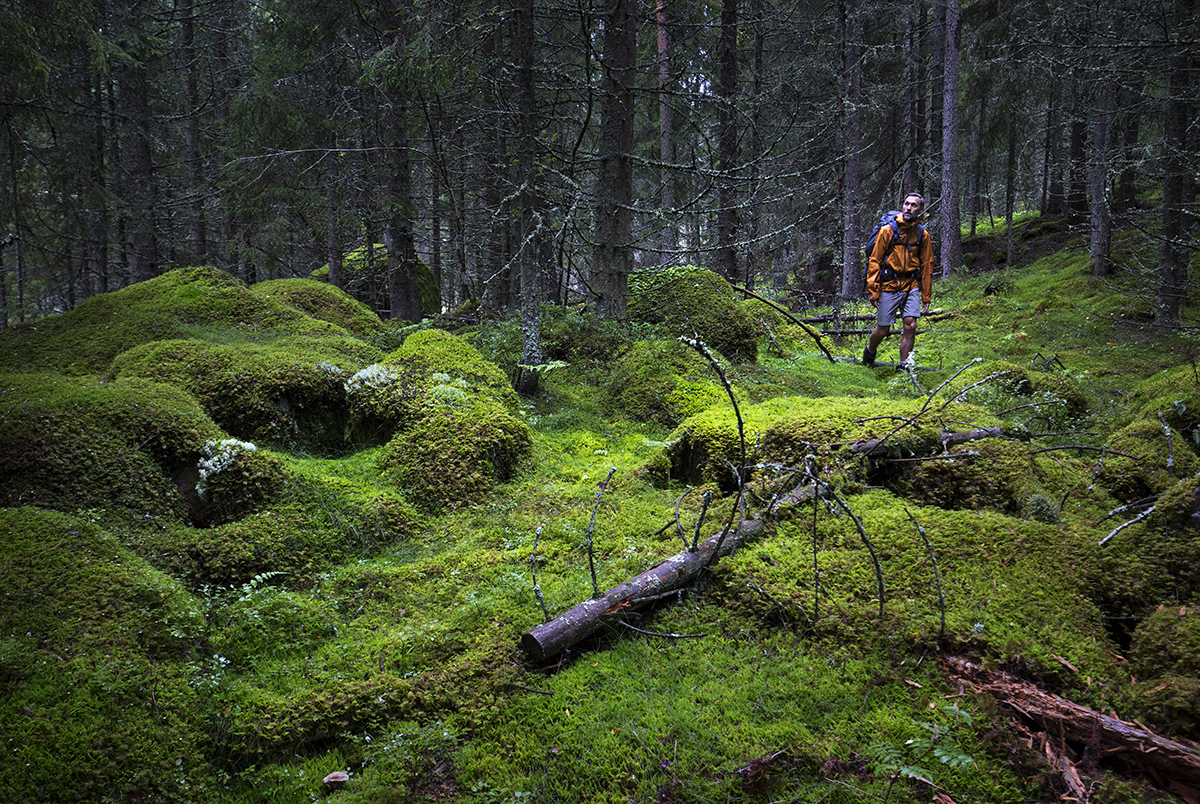 Photo: Roger Borgelid. Photo for illustration purposes only.
 -
-
Hunting and gathering
My grandfather had one arm. How can a one-armed man fish? Casting with your rod would seem easy enough, but how did Grandpa get the worm on the hook? Nobody really knows but somehow my grandfather did it. He was probably too embarrassed to let anybody watch him. He would go off into the woods for a minute by himself and somehow, between his good hand and his stump, perhaps using his shoe to hold the hook against the edge of a stone, he could bait his hook. He would emerge from the bushes, hook baited, and go on to catch just as many fish as his two-handed friends did.
Winter is the time of year for illness, especially when the people are bunched up in close quarters. Colds and flus spread easily under these conditions. Summer is the time of year to prepare for the health challenges of the next winter, which Fori did by gathering herbal medicines. Home remedies were his doctor and these were available for free out there in the Gorge if you gathered your own.
Once or twice each summer, Fori would ask Grandpa for a ride up to Summerdale where the Gorge begins. They might fish together for a while, probably tipple a bit as well, then Grandpa would head back to town to keep his kids (and grandkids) happy while Fori would head off into the woods and follow the Gorge back to town over the next couple days. You can walk it in one day if you proceed briskly but Fori needed more time to find and harvest the plants he needed.
What did Fori eat? He got food from the land, and he fished - perhaps some trout or crayfish cooked over the campfire, plus whatever berries were in season. He probably had some rye crisps in his rucksack and a can of brown beans for back-up, just in case. He cooked over an open fire and slept on the forest floor. If there was rain he knew how to shelter beneath hemlock trees and how to build a small lean-to from branches and fresh hemlock boughs.
In addition to fishing, visiting and hiking, Fori's real purpose was to gather his medicines for the winter. I imagine he was acquainted with Art Söderberg of Sherman and had found out where to find ginseng roots which he dug and dried for healthy teas and tonics. Black peppermint grows all around (we call it "Gorge mint") and does much to calm an upset stomach as well as to prepare a cool iced tea for those hot days. Dried blackberry leaves are good for more serious intestinal upsets. The yellow flowers of mullein are good for sore throats and help with flu recovery. Its huge fuzzy leaves can be used as bandages or to hold a healing poultice made from a multitude of medicinal herbs. Boneset is a waist-high white wildflower with perfoliate leaves (the stem appears to pass right through them) which are vile tasting but very good medicine to help you to recover from influenza. Sassafras and spikenard also grow in the Gorge. These roots produce appealing "root beer" flavors and have their own healing properties as well. -
The Swedish right to public access
As Fori walked back to town he crossed dozens of property lines. The Chautauqua Gorge is mostly private property. There are a small number of land trusts and the approximately one square mile of Chautauqua Gorge State Forest, plus a larger area for the Town of Westfield Watershed lands. It is not a "park" nor a "wilderness area," although it may look like that in most areas. Fori did not feel as if he was intruding on private property or stealing roots and herbs that legally belonged to others, though he was.
Fori was exercising his allemansrätten, the right to public access. This is an ancient land-use practice that dates back to Viking times and probably earlier. The nobility owned the land, of course, but the common people had retained the right to travel across it, to camp temporarily, to gather mushrooms and berries, to follow the creeks to keep track of their trail.
This Swedish word means "all men's right" but is perhaps better translated as "the right to roam." This means there is no such thing as a "no trespassing" sign in Sweden and a number of other Nordic countries. Some version of allemansrätten is respected in Norway, Iceland, Scotland, Finland, Latvia, Lithuania, Switzerland and other places, though this practice may have other names in other languages and slightly differing ideas about what is permissible and what is not. It is perfectly legal to walk, ski, skate, swim, hike, camp and forage for wild foods on most any wild lands whether public or private. Of course it is not cool for outsiders to lurk in private gardens or interfere with cultivated fields and farms but anyone can cross a fallow field, hike through a wild forest or follow a creek or undeveloped lakeshore. There are differing understandings about hunting, fishing, shooting and related issues. Motorized vehicles are not usually welcome on these wild lands.
Fori never felt as if he were sneaking or stealing because he had grown up believing in allemansrätten.
The "right to roam" may be another way to express this in English but it is not a concept in American law. It has, however, been a long-time practice in the Chautauqua Gorge, probably due to the presence of so many Swedish immigrants in the Chautauqua County area. The flat and arable lands had been largely taken by the time the Swedish immigrants started arriving en masse in the latter part of the 1800s. The Swedish homesteaders were more likely to end up with less expensive parcels of land located near or within ravines, gorges, swamps and wetlands.
The Beckman branch of my own family began their lives in America in the back reaches of Hartfield Swamp before Lawson Road was put through, and of course they respected allemansrätten. Anglo-American relatives came to respect this style of land use, too, especially those who had married Swedes.
Jack Beckman was our local N.Y. State Assemblyman for three terms in the late 1960s and early 1970s. He sponsored a law which permitted the state to begin buying up fishing rights along certain streams and opening them for public use. Today there are numerous "fishing trails" leading to the bottom of the Gorge, and the state has by now bought up well over 50% of the fishing rights. Chautauqua Creek is one place where "the right to roam" does seem to be reasserting itself.
Uncle Jack never did sell his fishing rights on the stream behind his cabin. If he found someone fishing at his favorite spot, he wanted still to be "within his rights" to tell the guy to move along, whether upstream or downstream, to another place close at hand where these fishing rights had been sold to the state. The Gorge is huge and remote, so he seldom needed to do this.
For a while there was talk of self-appointed private property protectors in the Gorge. These were gentlemen who might station themselves at the entrances to their private properties and deny people access to the Gorge if it were not fishing season or if they were not equipped with fishing poles or if they did not have valid licenses or if the land was "POSTED - NO TRESPASSING," or if the self-appointed private property protector could come up with any other reasons to keep the general public out. -
For the love of blackberry pie
Anyone who has owned land in the Gorge has undoubtedly over the years had to deal with a number of problems like vandalism, bonfires, timber theft, dumping, gravel theft, illegal construction projects, improper use of motorized vehicles, rowdy booze parties, skinny-dipping, and so on. Some Americans need to learn more respect for private property if the right to roam is to become more firmly established.
I am reminded here of an event some 30 years ago when several young girls from Summerdale were denied access to the Gorge. They were in tears because some new property owners from a distant city had kicked them out. They had gone blackberrying in this area for many years and were now being denied this pleasure by the new owners. I did not know the girls (nor the new owners) but the story quickly passed from neighbor to neighbor and soon arrived at a home I was visiting.
Fori had died by this point in time and never got to hear this story. This makes me happy because I know he would have found it all to be deeply depressing.
Did the woodsmen not want the girls to hear them cursing and telling dirty jokes or did they merely want to revel in their private property rights? A kinder and gentler response to this situation would have been to say they were having a picnic and "why don't you girls come back tomorrow afternoon? We will be gone from our property by then, and there are sure to be plenty of blackberries left for you to pick without disturbing our picnic."
The girls would not have run away crying and neither you nor I would ever even have heard this story. And, just as important, someone might have gotten to enjoy a piece of fresh blackberry pie.
Jay Stratton -
*Chautauqua Gorge is the area west of Lake Chautauqua and northwest of Jamestown, NY and just south of Lake Erie. It was at one point heavily settled by Swedish immigrants looking for work in the forest or in the wood working- or furniture industry located here.
-
*Fori is not a common Swedish or Norse name. It could have been a nickname or possibly developed from "For"—another way of spelling Frey, Freyr or Frej, the god of fertility in Norse mythology. Given Fori’s affinity with nature, today’s meaning of the abbreviation seems more than adequate: A Forest of Recognized Importance (FORI) - is a forest that represents a globally, regionally and nationally significant large landscape area of exceptional ecological, social, cultural or biological value.
-
-