
Hope for the surströmming?
Swedish Trade Minister Ewa Björling is trying to save the surströmming by inviting the EU commission to a surströmming dinner... is that a good idea we wonder?
-
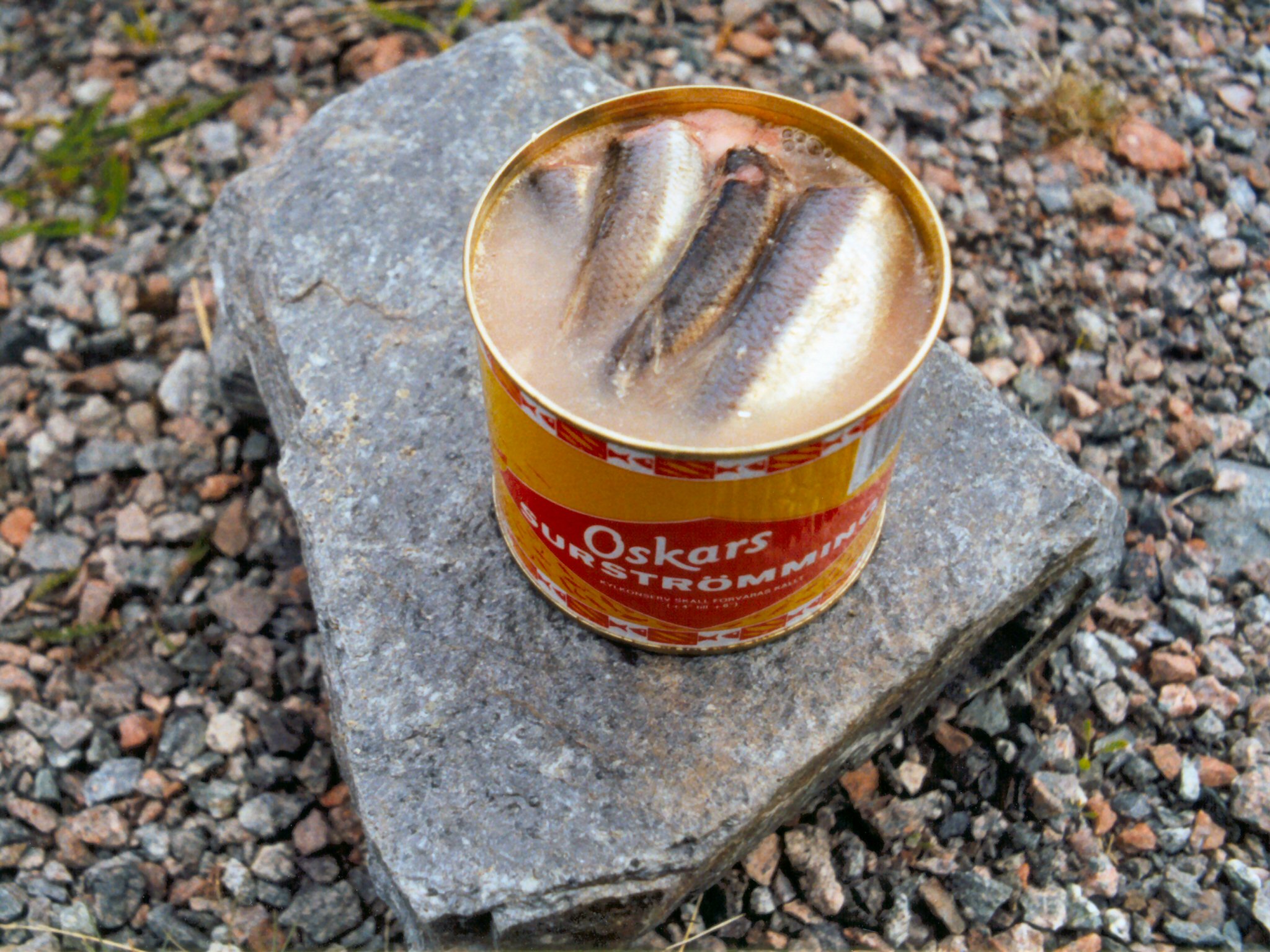 Surströmming (canned fermented Baltic herring) is caught in spring. It is fermented in barrels for one to two months, then tinned where the fermentation continues. Half a year to a year later, gases have built up sufficiently for the once cylindrical tins to bulge into a more rounded shape.
 -
-
The European Union wants to ban the surströmming, you know that – hmm.. to some terrible - tinned fermented Baltic herring, that can only be eaten outside? Trade Minister Ewa Björling will do her best to save the smelly fish. Björling is from Norrland and loves to eat her surströmming with mandelpotatis (small almond shaped potatoes related to fingerling potatoes in the US), yellow onion and tomatoes – she’s terrified at the thought that this little appreciated Swedish delicacy will have to be removed from our tables just because of the European Union. The problem is that surströmming contains dioxin, a toxic environmental pollutant. Sweden was granted an exemption, but it’s not clear whether or not that exemption will be extended, and it is due December 31 2011.
-
Surströmming for the EU commission…
Björling calls surströmming “an important Swedish tradition” and believes it is wrong to put a ban on it. She is now thinking about inviting the European Union’s commission on a surströmming dinner to make them change their minds. “I don’t believe they’ve ever tried it, and I am sure they’re curious about it,” she says. That the fatty herring contains dioxin is not a problem according to Björling, because Swedes eat it in such small portions and so rarely that it poses no serious threat. “Many delicacies contain poisons,” she argues. “French cheeses, for instance, do too. I don’t think the EU commission would even dream about banning French cheeses. The French would rage at that. Now it is time for us to rage.” Together with Minister of Agriculture, Eskil Erlandsson, Björling is now lobbying to keep the exemption for surströmming. The Baltic herring is caught in spring, when it is in prime condition just about to spawn. It is then fermented in barrels for one to two months, then tinned where the fermentation continues. Half a year to a year later, gases have built up sufficiently for the once cylindrical tins to bulge into a more rounded shape. These unusual containers of surströmming can be found in supermarkets all over Sweden. -
Find out more about the tradition behind this delicacy, which, contrary to gravlax, has yet to find its way to the world's gourmet restaurants:
-
-