
Recycling with sustainable technology
Swedish consumers are facing constantly increased demands for source-separated recycling and this creates other difficulties for municipalities that struggle with littering, missorting and illegal dumping at recycling stations.
-
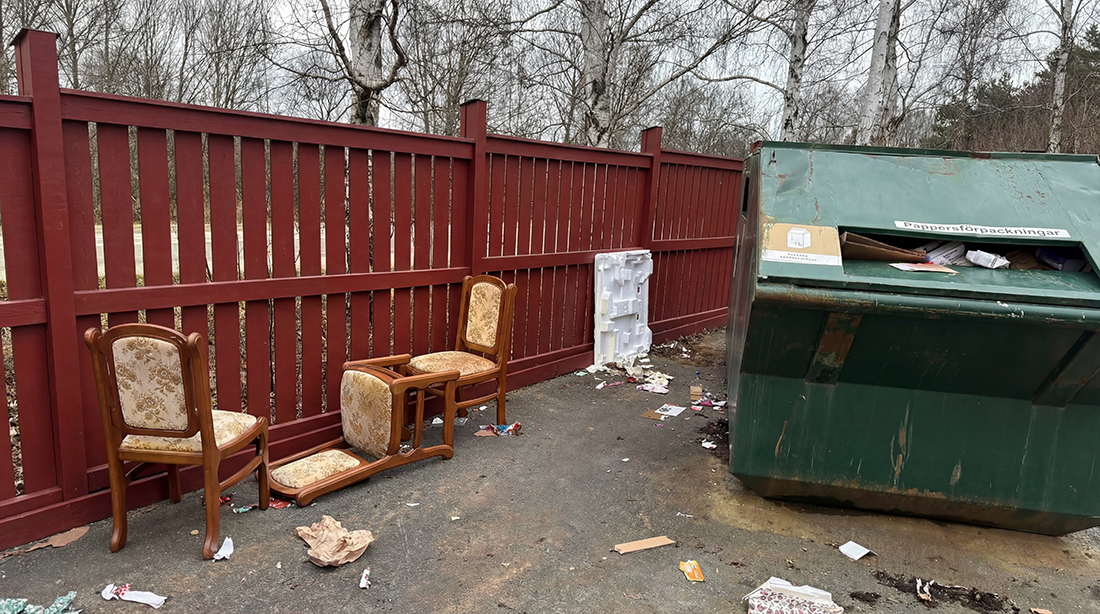 With new technology, municipalities can work more proactively. By actually understanding what is happening at a recycling station – when problems arise, how the site is used and where interventions are needed – municipalities can both reduce costs and improve the environment for all residents.
 -
-
In Sweden, it is the consumers themselves who sort and often deliver recyclable products and materials to special recycling stations. And now things are changing in the U.S. as well. While many areas in the U.S. have transitioned to "single-stream" (putting all recyclables in one bin), some municipalities have changed direction to reduce contamination and costs. Several municipalities, including boroughs and townships in New Jersey, Pennsylvania, Texas and Washington state have returned to dual-stream or source-separated collection, for instance requiring residents to separate paper/cardboard from bottles, cans and containers.
Swedish consumers are facing constantly increased demands for source-separated recycling and this creates other difficulties for municipalities that struggle with littering, missorting and illegal dumping at recycling stations. The discussion is often about accessibility – making it easier to sort by collecting closer to people’s homes. Another aspect that often gets overlooked is how the recycling stations are actually experienced. In many places, the systems work well. But there are also stations where overcrowded containers and waste left next to containers create an environment that is perceived as dirty and unsafe. Experience shows that when a place is already messy, the threshold for more people to do the wrong thing is lowered.
The opposite also applies: A clean and well-maintained environment makes it easier to do the right thing.
Unmanned recycling stations filled with illegal dumping also cause fire risks, can attract pests in addition to creating unsafe environments and dissatisfied residents. For municipalities, this is not only a matter of residents’ well-being, but also a matter of costs. Recurring clean-up, inefficient use of resources and difficulties in getting to the root causes make the work reactive. Interventions are often only initiated to fix problems – and often in the same places, over and over again.
With new technology, municipalities can work more proactively. By actually understanding what is happening at a recycling station – when problems arise, how the site is used and where interventions are needed – municipalities can both reduce costs and improve the environment for all residents.
The Swedish company Mediateknik has developed MEDrecycle, which uses AI-based analysis to identify deviations such as dumping, which makes it possible to act faster and more accurately. At the same time, statistics are created that make it easier to work preventively, rather than just address consequences. When recycling stations are kept clean and well-functioning, behavior also changes over time. Fewer errors lead to fewer subsequent errors. And a place that is perceived as safe and well-maintained also becomes a place where more people actually want to do the right thing. Cleaner recycling stations are not just a matter of convenience. They are a prerequisite for a modern recycling system to function as intended. For more info, see https://web.mediateknik.net/ -
-