
Research offers hope for treatment of resistant bacteria
Resistant bacteria are strains that have evolved to survive exposure to antibiotics that once killed them. Their resistance develops through genetic mutations or by acquiring resistance genes from other bacteria. Humans' overuse and misuse of antibiotics accelerate this process, making infections harder to treat and posing serious public health risks worldwide. Now Swedish researchers have found a way to make a fresh start.
-
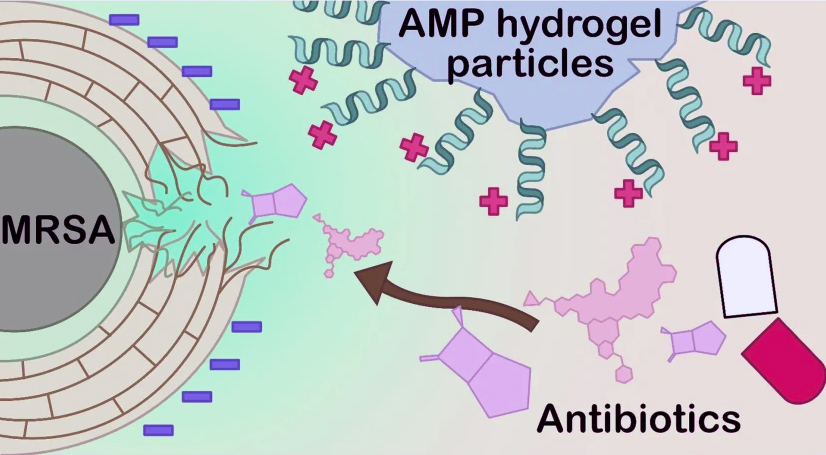 Antibacterial material restores the efficacy of antibiotics against resistant bacteria
 -
-
Antibacterial material restores the efficacy of antibiotics against resistant bacteria
-
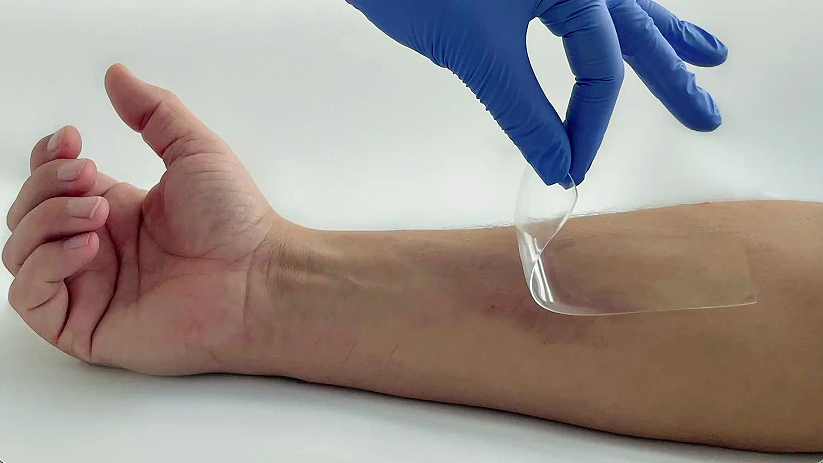 Resistant bacteria can regain susceptibility to antibiotics when the treatment is combined with a material equipped with antibacterial peptides.
 -
-
Research from Chalmers University of Technology in Gothenburg, Sweden shows that resistant bacteria can regain susceptibility to antibiotics when the treatment is combined with a material equipped with antibacterial peptides. The study, performed in a laboratory environment, shows that antibiotics can achieve a 64-fold increase in bactericidal effect when used together with the material, whose antibacterial properties are also greatly enhanced by this combination.
The bactericidal material has been developed for medical applications and has been studied by the researchers for many years. It has shown a strong ability to kill many different types of bacteria – including antibiotic resistant ones. The material consists of a specially designed hydrogel that contains antibacterial peptides, which are molecules that also serve as the building blocks of proteins.
To enable clinical use for the peptide material, particularly in combination with standard treatments such as antibiotics, the researchers had to ensure that the material does not negatively impact the efficacy of antibiotics when used concurrently.
The study yielded surprisingly positive results: The antibiotics unexpectedly became more effective in combination with the material. The researchers also discovered a synergistic effect against certain resistant bacteria, where the antibacterial effects of the peptide material and antibiotics were not only additive but greatly enhanced when used together. This has not been previously demonstrated.
"When particles of the hydrogel came into close contact with the bacteria, they weakened and became more susceptible to the antibiotic treatment. In some cases, the antibiotics became effective again against bacteria that were previously resistant," says Annija Stepulane, doctoral student in applied chemistry at Chalmers and the first author of the scientific paper. -
Resistant bacteria regained susceptibility
The peptide material was tested in bacterial cultures, in combination with two different antibiotics: oxacillin and vancomycin. The bacteria included in the experiments were two types of staphylococci (S. aureus), one of which is a strain (Methicillin-resistant Staphylococcus aureus, MRSA) resistant to several antibiotics.
The most powerful effect observed in the study was with MRSA, especially when the material was combined with oxacillin – an antibiotic to which the bacteria are normally resistant. The combination lowered the effective concentration of oxacillin 64-fold compared to when the antibiotic was used alone. Consequently, the concentration of oxacillin fell below the threshold at which the bacteria are classified as resistant to the drug. With vancomycin, the effective concentration was also lowered when the drug was combined with the hydrogel, though this effect was additive rather than synergistic. -
Stable and active treatment over time
Researchers have tried to combine antimicrobial peptides with antibiotics previously, but so far only with peptides in solution. In this form, the peptides are highly sensitive and lose effectiveness when exposed to bodily fluids, such as blood. However, when the peptides are attached to a hydrogel, they become significantly more stable and can be active for a longer period.
The Chalmers researchers have previously measured bactericidal activity lasting for several days with the hydrogel, as opposed to a few hours with peptides in solution. They see numerous advantages with this formulation.
"The peptide-based material can be applied locally, on a limited part of the body, so the entire body is not affected. The material is non-toxic and does not cause any adverse side effects," says Martin Andersson, research leader and professor of applied chemistry at Chalmers.
The hydrogel, which can also be formulated as particles in a spray, can increase the safety and efficacy of a course of antibiotics the patient receives. One potential application of this discovery is in wound treatment.
"Often, you don't know whether the bacteria that caused a wound infection are resistant to a certain antibiotic when you start treatment. Applying the peptide material to the wound simultaneously increases the likelihood of the antibiotic being effective against the bacteria. Then you can cure the infection without having to use additional types of antibiotics," says Andersson.
Since the peptide material only has a positive impact on the healing process, the researchers also see great advantages in using it as a standard treatment to prevent wound infections.
"The material could be used in healthcare settings, for example following surgeries – a possibility already available for veterinary care in some countries – and at home. It could function like a regular bandage, especially for those concerned about infections. This can be particularly interesting in areas with a high prevalence of resistant infections, such as certain parts of Africa and Asia, where extra caution is needed with wound injuries," says Andersson.
By Jenny Holmstrand -
For more information, see the Chalmers website: www.chalmers.se/masters and www.chalmers.se/scholarships
-
Facts about Chalmers University of Technology:
- Chalmers offers Bachelor, Master and PhD programs. All master’s programs are taught in English.
- Tuition fees: Master’s programs: approximately $16,000/year. Higher education in Sweden is free for students from countries within the European Union (EU), the European Economic Area (EEA) or Switzerland.
- 100% tuition fee waivers are awarded to two students with US citizenship each year for studies on Engineering master’s programmes. -
-